Air RB / Aircraft Database / Profile
F-16CM
USA · Rank VIII · Fighter
- Acquisition Type
- Tech Tree
- Air RB battle rating
- 13.7Observed October 8, 2026
Weapons & equipment checked October 14, 2026.
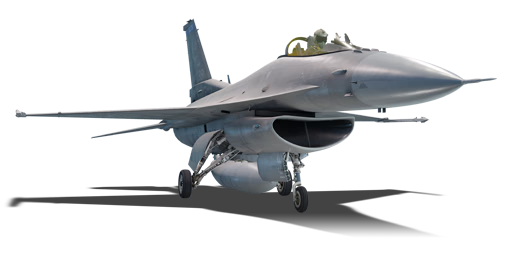
Aircraft overview
F-16CM can put pressure on the first exchange with AIM-120A AMRAAM. Make the opponent defend, keep a route out, and reassess before closing. Flying straight at the contact to watch the missile is how a useful opening becomes a trade.
How to fly it
Set up the first engagement
Do not lead the first merge. Approach to one side of the main push and let the opening missile exchange show you where the enemy team is committing.
Make the attack count
Attack an enemy chasing a teammate. Stay for a turning fight only while it remains isolated; when another enemy closes, unload the turn and head toward support.
Know when to break off
Leave when more enemies arrive, the target draws you away from support, or another turn costs the speed you need to escape. A teammate nearby is more useful than a duel you cannot finish.
Common mistakes
- Forcing the original plan. Staying glued to one opponent after another enemy enters missile range.
- Ignoring the next attacker. Look outside the target chase between attacks. The enemy arriving from behind is often the one who decides whether you get home.
Strengths & limitations
Strengths
Make them defend before closing
AIM-120A AMRAAM gives you an active-radar option. Use the launch to disrupt an opponent’s approach rather than treating the missile’s maximum reach as a promise of a hit.
Make the first burst count
With 20 mm M61A1 cannon, line up the shot before you close. Fire a short burst as the target crosses the sight, then look outside the gunsight before deciding to follow.
Limitations
A missed shot can cost the next fight
If the first attack becomes a slow chase, another enemy gets time to line up. Check above and behind before spending more speed on the original target.
A launch does not remove the shooter
A pressured opponent may still have a missile coming toward you. Keep checking the RWR and the sky after firing rather than assuming the exchange is finished.
Recommended Air RB loadouts
AIM-120A AMRAAM
Use this active-radar option for the opening exchange when fitted. Support the shot while it is safe to do so, and make room to defend rather than continuing straight toward the enemy.
AIM-7M Sparrow
Use this semi-active radar option when you have a workable radar track and room to support the attack. Do not keep the nose committed once an incoming threat makes that unsafe.
AIM-9M Sidewinder
Take the AIM-9M once it is unlocked. Its flare rejection and low-smoke motor make it a better choice than the AIM-9L on an aircraft offering both. Still choose a useful angle; a target already defending can defeat the shot.
Leave the strike load behind
Take the air-combat fit with the missiles you intend to use when you are hunting aircraft. Bombs and rockets add weight; carry them for a planned ground attack rather than on every sortie.
Radar & defenses
React to warnings in time
A radar warning matters even when you nearly have your own shot. Make room to defend, and keep looking for infrared launches that the RWR cannot announce.
Check the countermeasure fit
Fit the available countermeasures for the threats you expect. For an infrared attack, cut afterburner if in use, flare and change the missile’s view of the aircraft. For radar threats, combine the appropriate defensive turn with chaff where fitted.
Cue the target, then check the shot
Helmet cueing can reduce the time spent bringing a compatible seeker onto a contact. Check the missile’s launch conditions and nearby friendlies before firing outside the nose.
Ground attack & CAS
AGR-20A (APKWS II M151) missiles
Set up AGR-20A (APKWS II M151) missiles before entering the target area. Get the target and guidance ready early; if the approach falls apart, break away rather than searching through the sight while flying at an SPAA.
Choose the target before diving
For 3 × 500 lb LDGP Mk 82 bomb, choose the target before the run and allow room to pull out clear of the blast. Turn away after release; watching the hit leaves you flying a predictable line over the target.
Set the sight before the run
Select the fitted weapon and its supported impact or release cue before entering the target area. Make the correction on the approach; do not circle over the target trying to work out the controls.
Handling & fuel
Keep speed for the next decision
Ease off the pull when the shot is gone. Recover speed and separation before deciding to turn back; holding maximum input through every reversal leaves fewer options.
Plan the return
Check fuel after the opening fight, especially if you have spent the approach on high power. Allow for the flight back and landing rather than using the hangar endurance as an afterburner timer.
Battle Rating History
| Observation | Battle rating |
|---|---|
| October 8, 2026 · Archive | 13.7 |
Unchanged on . Profile rating observed October 8, 2026: 13.7.